
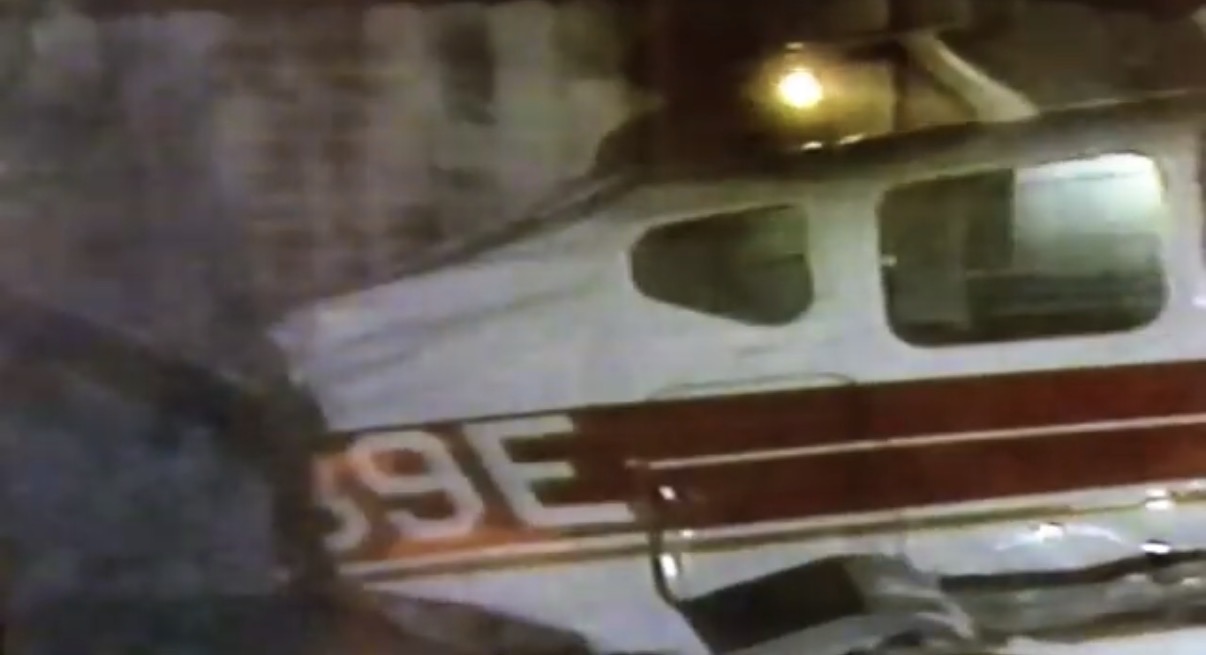
Around 9:30 PM on February 14, 2000, the pilot in Beechcraft Bonanza N6089E found himself in dangerously deteriorating weather conditions – ceilings below 300 feet and visibility reduced to just a quarter-mile. The pilot attempted two ILS approaches but couldn’t navigate the final approach successfully. Then, he made a chilling announcement to the air traffic controller: he only had 25 minutes of fuel left.
I was on a break in the break room when I heard over the loudspeaker to report to the radar room. When I walked up to the radar position, the controller turned and said, “he just ran out of gas” and the supervisor said, “do something”!
Why me? I was one of the few old timers that still knew how to conduct a radar surveillance approach and I was a pilot.
Most fatal general aviation accidents happen because the pilot loses control of the aircraft. Watching the radar, I saw that N89E was in a spiral descent – he was losing control fast. As a pilot myself, I knew I had to get him to stabilize, slow down, and regain control. I also knew that given his altitude and lack of fuel, he was going to hit something as soon as he broke through the clouds. My only hope was that by getting him to slow the aircraft, the impact might be survivable.
But in that moment, I faced a heavy responsibility by telling the pilot to stop his turn, I was now influencing his trajectory. When he broke out of the clouds, whatever was in his path would be the result of my instruction.
The pilot followed my instructions and as a result of fuel exhaustion, the plane was unable to reach an airport, and crashed into the second-story bedroom window of a home. A 4-year-old boy’s bed was against that very window, while his 18-month-old baby brother was on the other side of the room.
This is a 2 minute audio on Bonanza 89E:
This is a 90 second Channel 2 News Houston Report:
Miraculously, the 4-year-old wasn’t in bed – he had never stayed up past 9 PM before, but his father had purchased a new computer and they were loading games on the new computer. The crash occurred at 10 PM.
Debris from the impact caused part of the sheetrock ceiling to collapse, but the bars of the baby’s crib shielded him from injury. Had the older boy been asleep in his bed, he wouldn’t have survived.
A Phone Call from the Pilot
Two weeks after the crash, I received a call from the pilot of N89E. He wanted to thank me for telling him to fly the airplane – he admitted he had been too distracted trying to restart his engine. Incredibly, he walked away from the crash without a single serious injury. When the plane fell from the second-story window, the shift in its center of gravity sent it tumbling to the ground. Climbing out of the wreckage, he dropped his owner’s manual onto the grass. When he bent down to pick it up, he cut his finger on a shard of glass from the broken window. That minor cut was the only injury he sustained – not even a bruise.
Curious, I asked him what he did for a living. His response? He was a space physicist at NASA.
My Explanation
A few of my coworkers called what happened a divine intervention. Their words brought back a line I wrote in the introduction to this blog:
“Magic and miracles are simply the unexplained – until understanding turns them into knowledge without taking away their wonder.”
We can describe the events: the pilot ran out of fuel, I tried to help him keep control of the airplane, and it crashed into a home. The pilot and both children survived without injuries! Whatever name we give that outcome – luck, divine intervention, or something we don’t yet understand – it remains extraordinary.
I believe the Amarillo emergency made me prepare for all of the emergencies that followed!
Clint77090@Gmail.Com